

Last Updated: October 23, 2026
Quick Summary
Acting scene study classes for beginners teach you how to analyze scripts, identify emotional beats, and make intentional character choices through a repeatable process. You’ll spend time reading scenes aloud, discussing objectives, performing multiple times, and receiving feedback in a supportive environment with small class sizes.
- Emotional beats are moments where a character’s emotional state shifts, found by asking what the character wants and what changes their feelings.
- Objectives are what your character wants in a specific moment, and tactics are the methods they use to achieve those objectives.
- Sense memory, listening, improvisation, and vocal technique exercises build foundational skills before tackling full scenes.
- Preparation includes memorizing lines, analyzing your scene with given circumstances and objectives marked in margins, and arriving early to settle in.
- Skills learned in class directly apply to auditions and on-set work, helping you make quick choices and perform with authenticity under pressure.
Table of Contents
- What Beginners Should Expect in Acting Scene Study Classes
- How to Analyze a Script for Emotional Beats
- Acting Scene Analysis: Breaking Down Your Material
- Acting Exercises for Beginners: Building Your Foundation
- How to Prepare for an Acting Class
- Choosing the Right Scene Study Class for Your Goals
- From Classroom to Audition: Applying What You Learn
- Frequently Asked Questions
What Beginners Should Expect in Acting Scene Study Classes
Walking into your first acting scene study class can feel intimidating. You’re about to spend time analyzing scripts, performing emotional scenes, and receiving feedback from an instructor and peers. But here’s what most beginners don’t realize: scene study classes aren’t about being perfect.

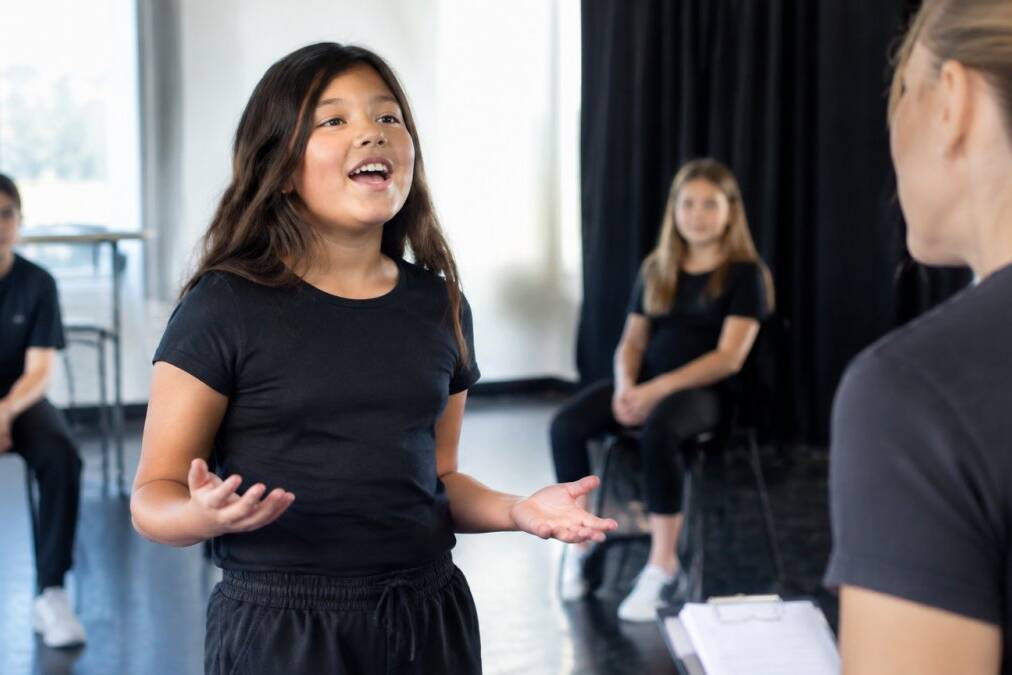
In an acting scene study class for beginners, expect to spend time reading scripts aloud, discussing character objectives, and performing short scenes multiple times. Your instructor will guide you through analyzing emotional beats, understanding subtext, and making character choices that feel real.
The environment matters. Small class sizes mean you’ll get personalized attention. At Ventura Actors Studio, we keep groups intentionally small so each student receives meaningful feedback and has multiple opportunities to perform. This creates a supportive space where mistakes become learning opportunities rather than embarrassments.
You’ll also discover that scene study isn’t just about theater. On-camera acting requires different techniques than stage work. Your instructor will teach you how to adjust your performance for film and television, including how to handle cameras, hit marks, and deliver dialogue naturally without projecting to the back of a theater.
How to Analyze a Script for Emotional Beats
Before you can perform a scene effectively, you need to understand what’s actually happening emotionally. Emotional beats are the moments in a scene where a character’s emotional state shifts. Identifying these beats is the foundation of scene analysis.
Start by reading the script once without stopping. Don’t mark anything. Just absorb the story and get a sense of where the character is emotionally at the beginning, middle, and end. On your second read, underline moments where the character’s feelings change.
Ask yourself: What does my character want in this moment? What are they feeling? What changes their emotional state? These questions help you identify beats. For example, if your character enters angry but leaves sad, there’s an emotional beat somewhere in the middle. Your job is to find it and understand what caused it.
Common emotional beats in scenes include moments of realization, conflict, vulnerability, or decision. According to acting technique resources from the American Film Institute, understanding these shifts helps actors make intentional choices rather than playing scenes generically.
Write your beats in the margins of your script. Use short phrases like “realizes he’s been betrayed” or “accepts the truth.” This visual map makes it easier to track the emotional journey when you perform.
Acting Scene Analysis: Breaking Down Your Material
Scene analysis goes deeper than identifying emotional beats. It’s about understanding the given circumstances, objectives, and tactics that drive the scene forward.
Given circumstances are the facts of the scene: where it takes place, when it happens, what just happened before, and any relevant backstory. These details shape how a character behaves. If your character just received bad news, that affects every line they say in the scene. If they’re in an unfamiliar place, they might be more cautious or defensive.
Objectives are what your character wants in the scene. Not what they want in life, what they want right now, in this specific moment with this other person. A strong objective is specific and actionable.
Tactics are the methods your character uses to achieve their objective. This is why scene study is so valuable, it teaches you that there are multiple ways to play a moment, and your job is to find the one that feels most authentic.
Break your scene into smaller units, assigning an objective and tactic to each. This structure prevents you from playing the entire scene the same way. Each unit has its own purpose, which creates dynamic, interesting performances.
Acting Exercises for Beginners: Building Your Foundation
Before you tackle full scenes, acting exercises for beginners help you build foundational skills. These exercises train your instincts and help you understand how your body and voice communicate emotion.
Sense memory exercises teach you to access real emotions. You recall a specific moment from your own life where you felt the emotion your character needs to feel. By reconnecting with that memory, you bring authentic emotion to the scene.
Listening exercises train you to react naturally to your scene partner rather than planning your reactions in advance. Many beginners perform their lines while waiting for their turn to speak. Real acting requires listening and responding.
Improvisation exercises build confidence and spontaneity. You’re given a situation and a relationship, then you make up dialogue and actions. Improv teaches you that there’s no “right” way to play a moment, only truthful choices. This reduces performance anxiety because you realize that mistakes can be interesting.
Vocal technique exercises help you understand how to use your voice for on-camera work. Stage acting requires projection. Film acting requires naturalness. You’ll learn to vary your pace, volume, and tone to convey emotion without overacting. These exercises are especially valuable if you’re transitioning from theater to film.
These exercises are the building blocks that make scene work more effective.
How to Prepare for an Acting Class
Showing up prepared makes a massive difference in what you get out of class. Preparation starts before you arrive.
Read your scene multiple times before class. Memorize your lines so you can focus on performance rather than reading from the script. If you’re not memorized, you’ll spend the entire class looking down, and you won’t be able to make real eye contact or react authentically to your scene partner.
Join our acting classes in Ventura today! →
Analyze your scene using the framework discussed earlier: identify given circumstances, determine your objective, and choose tactics. Write these down. Bring your script to class with your analysis marked in the margins.
Choose a scene partner if possible. The more you rehearse with the same person, the better you’ll understand how to react to them specifically. This preparation translates directly into better performances in class.
Arrive early. Give yourself time to settle into the space, review your analysis, and get into character before class starts. Rushing into class stressed creates tension in your body, which shows up in your performance.
Bring water and a notebook. You’ll be doing physical and vocal work, so stay hydrated. Write down feedback your instructor gives you. You won’t remember everything, and notes help you track your progress over time.
Choosing the Right Scene Study Class for Your Goals
Not all acting scene study classes for beginners are the same. Your choice should depend on your goals, experience level, and what you hope to accomplish.
If your goal is on-camera acting for film and television, choose a class that specifically teaches film technique. Theater technique and film technique are different. Stage acting requires bigger gestures and projection. Film acting requires subtlety and naturalism. Make sure your instructor has professional film and television credits.
Consider class size. Smaller classes mean more stage time and personalized feedback.
Ask about the instructor’s background. Do they have professional acting credits? Have they worked in casting, directing, or producing? Do they teach audition technique in addition to scene study? Instructors with real industry experience teach you skills that actually work in auditions and on set.
Look for a class that welcomes mixed-level students. Beginners often feel intimidated by more experienced actors, but training alongside people further along in their journey accelerates your growth. You learn by watching how experienced actors approach problems, and they benefit from the fresh perspective beginners bring.
At Ventura Actors Studio, our classes combine scene study with audition preparation and on-camera technique. Our instructors have over 40 years of combined experience in theater, television, film, and casting. We keep groups small so every student gets meaningful attention.
From Classroom to Audition: Applying What You Learn
Everything you learn in acting scene study classes for beginners has one purpose: preparing you for real auditions and on-set performance.
In an audition, you typically have 30 seconds to a few minutes to make an impression. You won’t have time to do a full scene analysis.
Apply what you learned about emotional beats. In an audition, you might only perform a few lines, but understanding the emotional arc of those lines prevents you from playing them flat.
Use your sense memory and listening skills. Casting directors want to see actors who feel present and real.
Cold reading is a specific skill. You’re given a script you’ve never seen and asked to perform it immediately. Scene study trains your instincts so you can make quick choices and trust them.
Many of our alumni have booked roles on Grey’s Anatomy, Netflix films, and national commercials. The work you do in class directly translates to results in auditions and on set.
| Skill | Application in Auditions | Application on Set |
|---|---|---|
| Emotional beats | Show range and arc in short performances | Hit specific emotional moments consistently |
| Objectives and tactics | Make clear, purposeful choices | Understand director notes and adjust quickly |
| Listening | React authentically to readers | Work naturally with scene partners |
| Sense memory | Access real emotions on command | Maintain consistency across multiple takes |
| Cold reading | Perform unfamiliar material confidently | Adapt to script changes and new directions |
The skills you build in acting scene study classes for beginners aren’t just for class. They’re professional tools that help you succeed in the entertainment industry.
The gap between wanting to act and actually booking roles comes down to training. Scene study teaches you the process. You learn how to analyze material, make intentional choices, and perform with authenticity.
At Ventura Actors Studio, we’ve built a training program specifically designed to move beginners from the classroom to professional auditions and on-set work. And our focus on on-camera technique and audition preparation means you’re learning skills that directly apply to booking roles in television, film, and commercials. Learn more about professional acting training approaches to understand what separates serious training from hobby classes.
Frequently Asked Questions
What should beginners expect in an acting scene study class?
Beginner scene study classes focus on foundational skills: script analysis, character development, emotional preparation, and working with scene partners. You’ll learn acting technique through hands-on exercises, spend time breaking down scenes to understand objectives and subtext, and perform scenes for feedback. Most classes are small and supportive, designed to build confidence as you develop on-camera acting skills and industry-ready performance habits.
How do you analyze a scene as a beginner actor?
Start by reading the script multiple times to understand the story and your character’s role. Identify your character’s objectives (what they want), tactics (how they try to get it), and the emotional beats (where feelings shift). Look for subtext, what’s really being said beneath the dialogue. Ask who, what, where, and when. Professional instructors teach these script interpretation tools systematically, helping beginners move from confusion to confident scene analysis in structured steps.
Do I need acting experience before taking a scene study class?
No. Scene study classes designed for beginners assume no prior experience and teach acting technique from the ground up. Whether you’ve done community theater or are completely new, beginner-level classes welcome all experience levels and focus on foundational skills like listening, emotional preparation, and character work. The key is finding a program explicitly marketed as beginner-friendly or introductory, so instruction matches your starting point.
How can I practice acting scenes at home between classes?
Choose a scene from a script or monologue, read it multiple times, and analyze it using techniques learned in class: identify objectives, tactics, and emotional beats. Practice delivering the lines with different emotional choices and physicality. Record yourself on video to observe your performance. Work with a scene partner if possible, dialogue practice with another person builds listening skills faster than solo rehearsal. Consistent at-home practice between weekly classes accelerates progress and reinforces what you learn.


Related Posts

Best Acting Resume Fonts and Layouts That Book Roles
Your acting resume fonts and layout decide your first impression. Compare…


Is Professional Acting Training Worth the Cost?
Before you pay for acting training, total tuition, living costs, lost income…
Professional Acting Training for Kids: What Parents Should Check
Acting training for kids can build confidence, but program quality varies…