

Table of Contents
- Why Serious Adult Actors Need Professional Training
- Adult Scene Study Classes: Building Craft and Confidence
- On-Camera Acting Classes for Adults: The Film and Television Edge
- Adult Audition Technique Classes: From Freezing to Booking
- Acting Class Exercises for Adults: Practical Tools That Work
- How to Choose the Right Acting Class for Your Goals
- What to Expect: Your First Class and Beyond
- Frequently Asked Questions
Last Updated: October 21, 2026
Why Serious Adult Actors Need Professional Training
Acting classes for serious adult actors aren’t a luxury, they’re a necessity to compete in film, television, and commercial work.
Many adult actors assume stage experience translates to screen work. It doesn’t. A gesture that reads from 50 rows back looks overdone in a close-up.
The stakes are different too. In professional auditions you compete against trained actors, and casting directors spot hesitation and lack of technique immediately.
Adult Scene Study Classes: Building Craft and Confidence
Adult scene study classes are where craft develops, not memorizing lines or hitting emotional beats, but character motivation, subtext, and authentic choices that serve the story.
Scene study teaches you to ask the right questions: What does your character want in this moment? What’s stopping them? What are they willing to do?
Adult scene study classes also build confidence through repetition, so scene work feels familiar rather than terrifying before you step into an audition room.
On-Camera Acting Classes for Adults: The Film and Television Edge
On-camera acting classes for adults teach a different skill than theater or scene study alone.
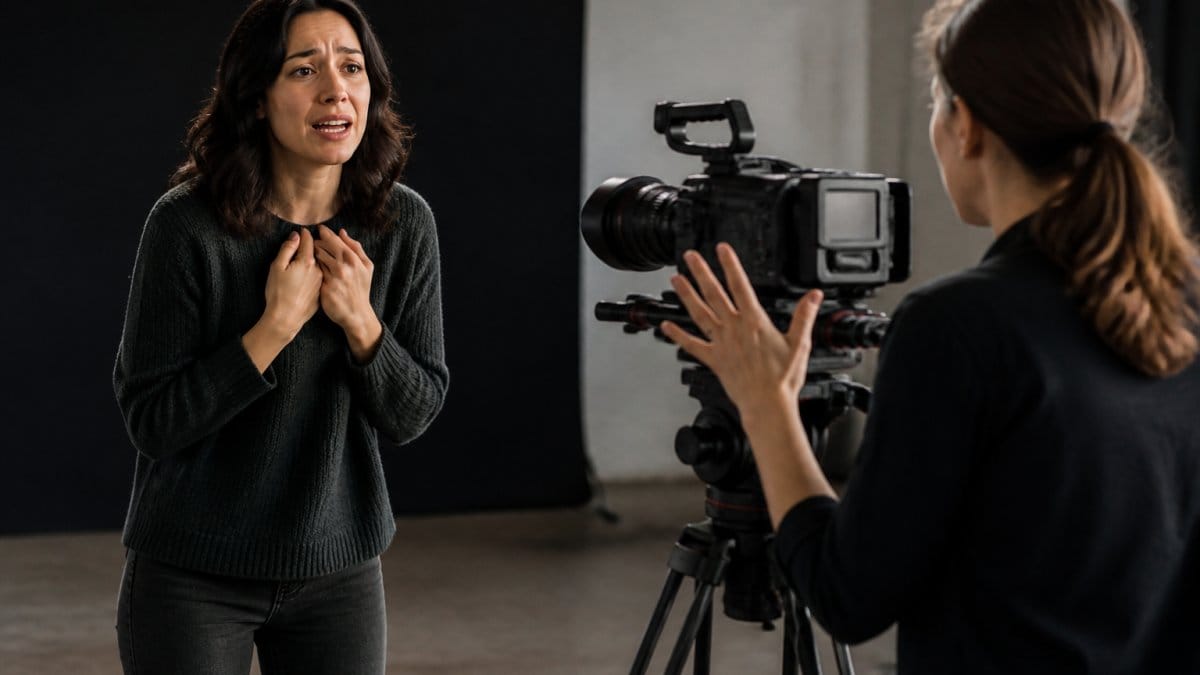
Professional on-camera training teaches you to hit your mark, focus your energy, and deliver consistent takes.
Many serious adult actors underestimate how technical on-camera work is. You’re collaborating with a cinematographer, director, and crew, delivering a performance within the camera’s constraints and the production schedule.
Adult Audition Technique Classes: From Freezing to Booking
Audition technique is where many talented actors fall apart. You can be brilliant in scene study and still freeze in an audition room.
Adult audition technique classes teach you to manage the mental and emotional side of auditioning: walking into a room with confidence, slating, delivering your monologue or sides without overthinking, and cold reading so unfamiliar material doesn’t throw you off balance.
The real value is learning to handle rejection and keep your confidence intact. Professional actors audition constantly and book maybe one in twenty times.
Many serious adult actors also struggle with self-tape auditions, now the primary way casting directors screen actors. You need to set up lighting, frame yourself, and deliver a performance that pops on a small screen. Acting classes for serious adult actors should include self-tape training as a core component.
Acting Class Exercises for Adults: Practical Tools That Work
The best acting class exercises for adults build specific, usable skills rather than abstract emotional exploration: making quick character choices, finding authenticity under pressure, and adjusting your performance based on direction.
Effective exercises include cold reading drills, where you deliver unfamiliar material with confidence and specificity, making fast choices about character, tone, and intention.
Improvisation is another critical tool, though many adult actors resist it.
Monologue work is foundational. You’ll practice monologues that showcase your range, comedic, dramatic, contemporary, classical, learning to make them feel like a real conversation rather than a performance.
How to Choose the Right Acting Class for Your Goals
Choosing an acting class for serious adult actors is a decision, not a vibe check. Most actors pick a class because a friend recommended it or the schedule worked, then spend hundreds or thousands discovering it was recreational when they needed professional. Use the framework below to separate rigorous training from a hobby class before you commit.
The Four-Criteria Decision Framework
Evaluate any class against four concrete criteria. If it fails two or more, it is probably recreational.
Join our acting classes in Ventura today! →
- Class size and feedback density. Ask how many students are enrolled and how many minutes of individual feedback each actor receives per session. A class of 6-8 actors in a three-hour session can give each person 20-30 minutes of focused notes. A class of 20 gives each actor five minutes or less. Feedback density is the single best predictor of whether you will actually improve.
- Practice expectations outside class. Rigorous training assigns scene preparation, cold-reading drills, and self-tape work between sessions. Recreational classes often require nothing. Ask directly: “How many hours of preparation are expected each week?” If the answer is vague, the training is vague.
- Instructor’s current industry activity. Credentials matter less than currency. An instructor with active film, television, or casting credits understands what casting directors respond to now. Ask when they last worked professionally and in what capacity.
- Defined technique and progression. Serious programs teach a named methodology (Meisner, Stanislavski, Chekhov, or a documented hybrid) and have a clear sequence from foundational work to advanced scene study. If the curriculum is “whatever we feel like today,” you are paying for a social club.
Bring these four questions to any trial class or audit. Instructors who run rigorous programs answer them directly and without defensiveness. Evasiveness is itself a data point.
How to Evaluate Instructors Without Trusting Marketing Claims
Every studio website says its instructors are “industry professionals.” That phrase means nothing until you verify it. Use these checks:
- Ask for specific credits, not adjectives. “Over 40 years of combined experience” is a marketing line. “She booked three guest-star roles in the last two years and spent five years as a casting associate” is verifiable. Ask for names of productions or casting offices.
- Ask how they give notes. Good instructors give specific, actionable notes tied to the scene’s circumstances (“Your character wants to leave the room, but you’re playing the line like you want to stay”). Weak instructors give vague emotional direction (“Go deeper,” “Be more vulnerable”).
- Watch how they handle a struggling actor. In a trial class, observe whether the instructor diagnoses the problem or simply repeats the note louder. Rigorous teachers have a vocabulary for craft problems.
Trial Classes, Audits, and Enrollment Checklist
Most reputable adult programs allow you to audit or take a single trial class before enrolling in a multi-week term. Use it as a diagnostic, not a sales pitch.
Questions to ask before you enroll:
- What is the total tuition, and what does it include? Are there registration fees, materials fees, or showcase fees?
- What is the attendance policy? How many sessions can I miss before I forfeit the term?
- Is there a drop-in rate, or must I commit to the full term?
Warning signs to watch for:
- Pressure to enroll on the spot or a discount that expires today.
- No clear answer on class size or curriculum.
- A trial class that is mostly lecture with no observed scene work.
A trial class should show you the actual work, not a highlight reel. If you do not see students receiving specific notes on prepared material, you are watching a marketing event.
Match the Class Format to Your Actual Goals
Your goals should determine the format. If you are targeting film and television, prioritize on-camera classes with self-tape practice and playback review. If you are targeting theater, prioritize scene study and text analysis with live performance opportunities. If you are already auditioning regularly, an audition technique or advanced scene study class will serve you better than another beginner foundation course.
| Your Goal | Best Format | What to Verify |
|---|---|---|
| Film/TV bookings | On-camera technique with playback | Camera setup, self-tape training, take-by-take feedback |
| Theater roles | Scene study and text analysis | Classical and contemporary material, live performance |
| Audition confidence | Audition technique | Cold reading drills, slate practice, mock auditions |
| Foundational craft | Beginning scene study | Named technique, clear progression, small class size |
| Working adult schedule | Evening/weekend or online | Attendance policy, hybrid options, commute time |
Scheduling and Accessibility for Working Adults
Serious training has to fit a working life, or you will quit. Before enrolling, map the logistics: start and end times, commute, and whether online or hybrid options exist. Get the attendance policy in writing. A program allowing two absences per term is workable; one that drops you after a single missed class is not. Evening and weekend sections are standard, but confirm the section you enroll in is taught by the instructor you evaluated, not a substitute.
Track Your Progress, Not Just Your Attendance
Rigorous training should produce measurable change. Keep a log after each class: what scene you worked, what note you received, what you’ll do differently. Every four to six weeks, compare a recorded self-tape or scene against an earlier one. Look for faster cold-reading choices, cleaner slate delivery, more grounded listening, fewer indications of “acting.” If you can’t point to a concrete change after a full term, the class isn’t working, regardless of how much you like the instructor.
Serious adult actors choose training the way they choose a scene partner: by evidence, not enthusiasm. Class size, feedback density, instructor currency, defined technique, transparent cost, and a workable schedule are the criteria that separate professional training from an expensive hobby.
What to Expect: Your First Class and Beyond
Most adult acting classes follow a predictable arc, but the details vary enough that you should know what you’re walking into before you pay. Here’s what a rigorous first class looks like, what it costs, and how to plan the first term for real value.
The First Session: What Actually Happens
A serious adult class usually begins with a brief warm-up (breathing, relaxation, voice or articulation) to get everyone present. The instructor then explains the term’s structure and technique. You’ll likely do a cold read or short improvised exercise so the instructor can assess each actor.
Bring a headshot and resume if you have them, though most adult classes don’t require them. Wear clothes you can move in. Expect physical work and watching.
Realistic Costs and Commitment
Pricing varies widely by format, city, and instructor reputation. Budget against these categories:
- Term tuition. Most adult scene study and on-camera classes are sold as multi-week terms (commonly 6-12 weeks). Expect to pay the full term upfront or in two installments.
- Drop-in rates. Some studios offer per-class drop-in pricing, which is useful for evaluating fit but usually costs more per session than a term commitment.
- Registration and materials fees. These are often small but real. Ask whether they are included in the quoted tuition.
Ask for the all-in cost in writing: tuition plus fees plus any required materials. A program that will not give you a total number before you enroll is telling you something.
Attendance, Makeup, and Refund Policies
Serious training requires consistent attendance, but working adults get sick and travel. Before you enroll, get clear answers on three policies: how many absences forfeit the term, whether missed classes can be made up in another section, and the refund or credit policy if you withdraw early. Tuition is commonly non-refundable after the first or second session, so know that before you pay.
Weeks Two Through the End of Term
After the first session, you’ll bring prepared scenes, rehearse outside class, perform for feedback, and revise based on notes. This cycle, prepare, perform, receive notes, revise, is where craft develops.
If the class includes on-camera work, you’ll review playback. Watching yourself is uncomfortable at first and essential later. Note what the camera reveals: eye line, listening, tension in the jaw or shoulders, and whether your choices read at close range.
How to Get the Most Out of Your First Term
- Prepare fully every week. Half-prepared scenes waste your feedback time and the class’s time.
- Take notes in class and review them before the next session. Actors who write down notes improve faster than actors who rely on memory.
- Ask for one specific thing to work on each week. “What is the single biggest adjustment I should make before next class?” is a better question than “How was that?”
The first term is a diagnostic as much as a training period. Go in with clear cost, schedule, and attendance expectations, prepare fully, and track specific changes in your work. If you can point to concrete improvement by the end of the term, you have found a program worth continuing.
Frequently Asked Questions
What should serious adult actors look for in an acting class?
Serious adult actors should prioritize instructors with professional credits in film, television, or theater; small class sizes that allow individual feedback; and training focused on on-camera technique and audition preparation. Look for classes that teach script analysis, character development, and cold reading skills, not just confidence-building. Verify that the curriculum addresses the specific format you’re pursuing, whether that’s commercials, film, or television roles. Check if alumni have booked professional work.
How is on-camera acting different from stage acting, and do I need both?
On-camera acting requires subtlety, precise eye-line work, and understanding how the camera captures emotion at close range. Stage acting projects to an audience and relies on larger gestures. For film and television auditions, on-camera technique is essential, the skills don’t transfer directly. Adult actors pursuing professional work in TV or film benefit from dedicated on-camera classes that teach camera angles, framing, and how to perform in tight spaces. Stage experience builds foundational craft, but on-camera technique is a separate skill set.
How long does it take to see results from acting classes?
Progress depends on your starting point and class frequency. Many actors report improved audition confidence and stronger self-tape submissions with consistent training. Booking roles typically takes longer and involves factors beyond class, agent representation, casting director relationships, and audition volume matter significantly. The real measure is measurable skill improvement: stronger scene work, better cold reading, and more controlled emotional choices. Choose classes with clear progression levels and ask instructors how they track student development.
Can adults with no acting experience take professional acting classes?
Yes. Professional acting classes for adults often offer beginner through advanced levels within the same studio. What matters is that the beginner curriculum doesn’t water down craft training, it should teach the same technique and script analysis methods as advanced classes, just at a slower pace. Look for programs that mix experience levels and use ensemble work to build community. Adult beginners often learn faster than younger students because they bring life experience and focused intention. Ask if the studio offers trial classes so you can assess the teaching approach.

Related Posts
Best Acting Resume Fonts and Layouts That Book Roles
Your acting resume fonts and layout decide your first impression. Compare…


Is Professional Acting Training Worth the Cost?
Before you pay for acting training, total tuition, living costs, lost income…
Professional Acting Training for Kids: What Parents Should Check
Acting training for kids can build confidence, but program quality varies…