

Quick Summary
Acting for kids builds confidence by giving children a role, a safe space to recover from mistakes, and repeated chances to speak and be heard. Progress usually appears gradually over a full session, often first in willingness rather than volume. Smaller groups and age-appropriate activities help shy and quiet children gain the most.
- Acting gives children a role, which takes the pressure off being themselves.
- Confidence growth shows up gradually, often first at home, rather than overnight.
- Smaller groups give each child more chances to perform than larger ones.
- Ask how many times your child will speak or perform in a single class.
- Ask about sensory accommodations and gradual participation for anxious or neurodivergent children.
Table of Contents
- How Acting for Kids Builds Confidence Over Time
- How to Choose an Age-Appropriate Acting Class for Your Child
- Acting Classes for Shy Kids: What Changes and What to Expect
- Confidence-Building Activities for Kids Used in Class
- Children’s Acting Exercises and What a Typical Class Looks Like
- Kids Improv Classes: Thinking on Your Feet
- Booking Your Child’s First Trial Class at Ventura Actors Studio
- Frequently Asked Questions
How Acting for Kids Builds Confidence Over Time
Last Updated: November 8, 2026
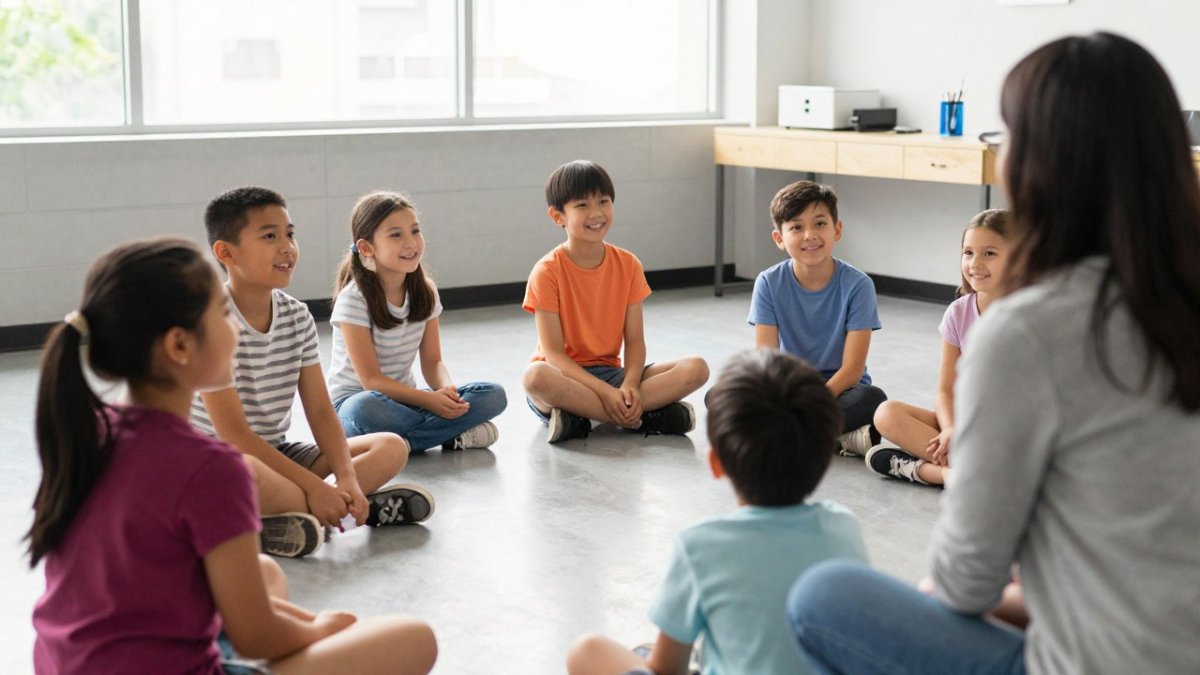
Acting for kids confidence building classes work because they ask a child to do something bold in a safe room, again and again. Acting classes built around that repetition give children a chance to read lines aloud, take risks with a character, and recover from a stumble in a supportive setting.
Gains in acting classes are rarely dramatic in week one. Progress tends to show up gradually over a full session, often first at home.
Acting builds confidence through three specific mechanisms. First, it gives children a role, which takes the pressure off being themselves. Second, it teaches them to recover from mistakes in front of others, because scenes keep moving. Third, it rewards listening, since a good scene partner responds to what is actually said.
A common mistake is expecting confidence to appear as extroversion. Quiet children often gain the most, because acting gives them a structured way to speak up. A reasonable goal for acting classes is a child who knows they can speak and be heard, rather than simply a louder child.
Keep expectations realistic. Progress in acting classes is usually steady across a session rather than an overnight change. Look for growth in willingness, not just volume: volunteering for a part, finishing a scene after a flub, or asking a question about a character.
How to Choose an Age-Appropriate Acting Class for Your Child
Choosing the right class starts with matching the program to your child’s age and temperament, but the practical work is in comparing specific program features side by side. If you want to see how one program is structured, the six-week kids and teens class format lays out what each week involves. Look for programs that name specific age bands and describe what each band actually does, not just “kids” and “teens.” You can compare the actual summer camp options for kids and teens to see how the age bands are organized.
Use this age-band comparison to evaluate what a program should offer at each stage:
| Age Band | Typical Class Length | Group Size That Works | What Activities Should Dominate | Beginner-Friendly Signals |
|---|---|---|---|---|
| Ages 5-7 | 45-60 min | 8-12 children | Movement games, name games, short group scenes, puppetry or costume play | Instructors who demo alongside kids; no required memorization |
| Ages 8-10 | 60-75 min | 10-14 children | Improv games, character walks, short scripted scenes with a partner | Parts assigned in class, not auditioned; feedback focused on effort |
| Ages 11-13 | 75-90 min | 10-16 children | Scene work, cold readings, monologues, ensemble improv | Scripts sent home ahead of time; low-pressure showcase options |
| Ages 14-17 | 90-120 min | 12-18 students | Scripted scenes, audition prep, character analysis, filmed playback | Clear leveling (beginner vs. advanced); feedback framed as craft notes |
Typical Class Length
Ask the studio how sessions are structured for your child’s specific band. Younger children usually need games, movement, and short, repeated exercises. Older kids can handle scripted scenes, cold readings, and feedback on their choices. You should be able to picture your child in the first session, if the studio can’t describe a sample class for your child’s age, that’s a warning sign.
Check instructor experience and class size together. Smaller groups give each child more chances to perform, which matters for confidence growth. In a larger class, each child gets less individual attention than in a smaller one, which is why group size is worth asking about. Ask directly: “How many times will my child speak or perform in a single class?” Knowing how often each child gets to perform can also help families connect classroom practice with public speaking confidence resources.
Consider these questions before enrolling:
- What activities happen in a typical class for my child’s age, and can you describe one full session?
- How many children are in the room, and how many instructors?
- How are children with shy, anxious, or neurodivergent temperaments supported?
- What is the instructor’s background in theater, television, or film, and do they have training in working with children?
- Is there a trial class or observation option, and can I watch part of a session?
- How does the studio handle feedback so it stays encouraging rather than critical?
- What is the refund or withdrawal policy if my child doesn’t connect with the class?
Watch out: a program that promises stardom, agent meetings, or fast results is selling a fantasy. Look for honest descriptions of what children learn and how progress is measured, and be skeptical of any studio that won’t let you observe a class before committing.
Acting Classes for Shy Kids: What Changes and What to Expect
Shy children often hesitate in the first few weeks, and that is normal. A good class gives them time to observe before they perform. A gradual approach, with group activities first and solo moments later, can help shy children feel more comfortable over time.
Expect gradual change. A shy child may first speak only in unison with classmates, then answer a question alone, then take a small role in a scene. Each step counts as progress, even if it looks modest from the outside. Progress for shy children often unfolds over several weeks, though every child moves at their own pace.
Families of shy children should share background with the instructor before the first class. Tell the teacher what helps your child feel safe and what makes them shut down. A short written note or a five-minute conversation before class is usually enough.
For children who are anxious or neurodivergent, including kids with autism spectrum disorder, ADHD, or sensory sensitivities, ask specific questions before enrolling:
- Sensory accommodations: Can the room be dimmed or noise reduced during warm-ups? Are there quiet spaces if a child needs a break?
- Predictability: Does the instructor post the class plan or give a visual schedule so the child knows what’s coming?
- Gradual participation: Is it acceptable for a child to observe for the first two or three classes before joining activities?
- Communication style: Does the instructor give literal, concrete directions rather than sarcastic or figurative feedback?
- Group size flexibility: Can the child start in a smaller group or a beginner-only section?
- Parent observation: Can a parent sit in the back for the first few sessions if that helps the child settle?
When choosing a studio, look for clear answers about how it supports children who need breaks or who are not ready to speak on day one.
Set a realistic timeline. Some children need a full session before they volunteer, while others open up in a few weeks. Both paths are valid. The aim is steady comfort, not a sudden change in personality.
Confidence-Building Activities for Kids Used in Class
Most acting classes rely on a handful of repeatable exercises that build confidence step by step. These activities keep children moving, speaking, and reacting in real time.
- Name games with movement: Children say their name with a gesture, then the group repeats it. This builds voice and presence with low stakes.
- Mirror work: Partners copy each other’s movements, which teaches attention and body awareness.
- Freeze scenes: The group acts out a moment and freezes, then the instructor asks what each character is feeling.
- Character walks: Children walk across the room as an animal, a king, or a nervous student, practicing posture and energy.
- Short monologues: Children perform 30- to 60-second pieces, with positive feedback focused on one specific strength.
These exercises work because they are predictable. Children know what to expect, which lowers anxiety and lets them focus on the task.
Children’s Acting Exercises and What a Typical Class Looks Like
A typical kids class runs 60 to 90 minutes and follows a clear rhythm. It usually opens with a warm-up of movement and voice, moves into a focused exercise, and closes with a short performance or group reflection.
Here is a common flow for a mid-age group:
| Segment | Length | What Happens |
|---|---|---|
| Warm-up | 10-15 min | Movement, breathing, voice games |
| Core exercise | 25-35 min | Scene work, improv, or character building |
| Performance | 15-20 min | Small groups perform for the class |
| Reflection | 5-10 min | Instructor gives specific, encouraging feedback |
Parents often ask whether children will be asked to perform in front of visitors. Many programs include an end-of-session showcase, but participation levels vary by child. Ask in advance how the studio handles showcases for shy students.
Safety and instructor qualifications matter as much as the lesson plan. Ask about background checks, staff training, and how the studio handles physical contact in exercises. Ask about instructors’ experience in theater, television, film, and casting when comparing programs. For a local comparison, read our guide to acting classes in Ventura County. Our guide on evaluating acting coaching covers the same questions in more depth.
Kids Improv Classes: Thinking on Your Feet
Improv is one of the strongest tools for building spontaneous confidence. In kids improv classes, children make up dialogue and action on the spot, learning to accept what a partner offers and build on it. Searches for kids improv classes often reflect this need for quick thinking and flexible communication.
Improv teaches three habits: listen fully, say yes to ideas, and keep the scene moving even when a mistake happens. These habits carry into school presentations, group projects, and everyday conversation.
Children who struggle with planned lines often do well in improv, because there is no script to get wrong. The skill is responding, not memorizing. Start with short games and build toward longer scenes as the child gains comfort.
Booking Your Child’s First Trial Class at Ventura Actors Studio
Many families find a trial visit helpful for judging the fit between their child and a class before committing.
Before booking, prepare a few details: your child’s age, any shyness or anxiety you want the instructor to know about, and your schedule. Ask about the age band, class length, and what your child should wear. For current pricing, check the studio’s website or contact the team for a quote.
After the trial, talk with your child about what they enjoyed and what felt hard. A child who wants to return is a strong signal that the class is working. Join our acting classes in Ventura today!
Frequently Asked Questions
What is the best age to start acting classes?
Many children start formal acting classes between ages 6 and 10, when they can follow simple instructions and take part in group games. Younger children often do well in playful, movement-based classes, while teens may prefer scene study and audition preparation. Look for a class grouped by age so the material matches your child’s developmental stage. Trial classes are a practical way to see whether a particular class suits your child before you commit to a schedule.
Can acting classes help a shy child become more confident?
Yes, acting classes can help shy children practice speaking, making eye contact and taking small risks in a safe setting. Shy kids often start with low-pressure activities such as partner games or group exercises, then move to short solo moments as they feel comfortable. Progress tends to be gradual, so measure it by small changes, like volunteering an idea or speaking up in a group, rather than by how they perform on stage. A supportive instructor who gives personal attention makes a large difference.
How often should kids take acting classes?
Most youth acting programs meet once or twice a week, usually for 60 to 90 minutes per session. Weekly attendance helps children build skills and retain what they learn between sessions. Parents can also support progress at home by reading scripts aloud or practicing simple improv games. Schedules and session lengths vary by class level, so check current options directly with the studio for the best fit.
Do kids need acting experience to join a class?
No, you do not need prior acting experience. Mixed-level classes welcome beginners and let students learn alongside peers who have some experience. Your child does not need to memorize lines or audition before enrolling. Bring curiosity and a willingness to try new things, and let the instructor guide the level of challenge.


Related Posts
How to Choose an Acting School: A Practical Guide
Learn how to choose an acting school by checking goals, faculty experience,…

How to Get Into TV Acting: A Step-by-Step Guide
Learn how to get into TV acting, from training and classes to headshots, demo…

How to Prepare for Professional Film Auditions
Prepare for film auditions with a step-by-step process covering self-tapes,…