

Quick Summary
Professional acting training for kids covers scene study, script analysis, on-camera technique, cold reading, and audition preparation. A strong program names these skills specifically and explains how it teaches each one, rather than relying on vague claims about creativity.
- Scene study teaches children to identify what their character wants and make choices that serve the story.
- On-camera technique teaches the small, controlled performance that film and television require.
- Audition classes should rehearse cold sides, slates, readers, marks, taking notes, and self-tapes.
- Ask whether instructors have professional credits and how long they have taught children specifically.
- Ask any program for its maximum class size and how much individual coaching each student receives.
Table of Contents
- What Professional Acting Training for Kids Actually Covers
- Acting Classes for Kids and Teens: Matching Age to Method
- Children’s Audition Preparation Classes and What They Teach
- Finding Professional Acting Training for Kids Near Me
- Does Professional Acting Training for Kids Online Work?
- How to Evaluate Instructors, Quality, and Costs
- Booking Your Child’s First Session at Ventura Actors Studio
- Frequently Asked Questions
What Professional Acting Training for Kids Actually Covers
Last Updated: November 12, 2026
Choosing professional acting training for kids can feel like guesswork. Most parents know their child loves performing, but few know what a serious program actually teaches. The question worth asking is what a young actor needs to book real work. The answer goes well beyond reciting lines in a school play.
Professional training for kids generally covers a core set of skills. Scene study teaches children to read a script, identify what their character wants, and make choices that serve the story. Script analysis builds the habit of finding meaning in the words on the page. On-camera technique teaches the small, controlled performance that film and television require, where a glance can carry more weight than a full stage gesture.
A common mistake is assuming that enthusiasm alone prepares a child for the industry. Enthusiasm matters, but casting directors look for control, focus, and the ability to take a note and adjust in the same take. Those habits take structured practice to develop.
Ask any program what it teaches in each of these areas. A vague answer such as “we focus on creativity” is a warning sign. A specific answer tells you the training is built for auditions, not just performances.
Quick answer: Professional acting training for kids covers scene study, script analysis, on-camera technique, cold reading, and audition preparation. Look for a program that names these skills specifically and explains how it teaches each one.
Acting Classes for Kids and Teens: Matching Age to Method
Younger children and teenagers need different approaches. A seven-year-old learns best through play, imagination, and short, physical exercises. A fifteen-year-old can handle abstract character analysis and longer scene work. Matching the method to the child’s developmental stage keeps training effective and enjoyable.
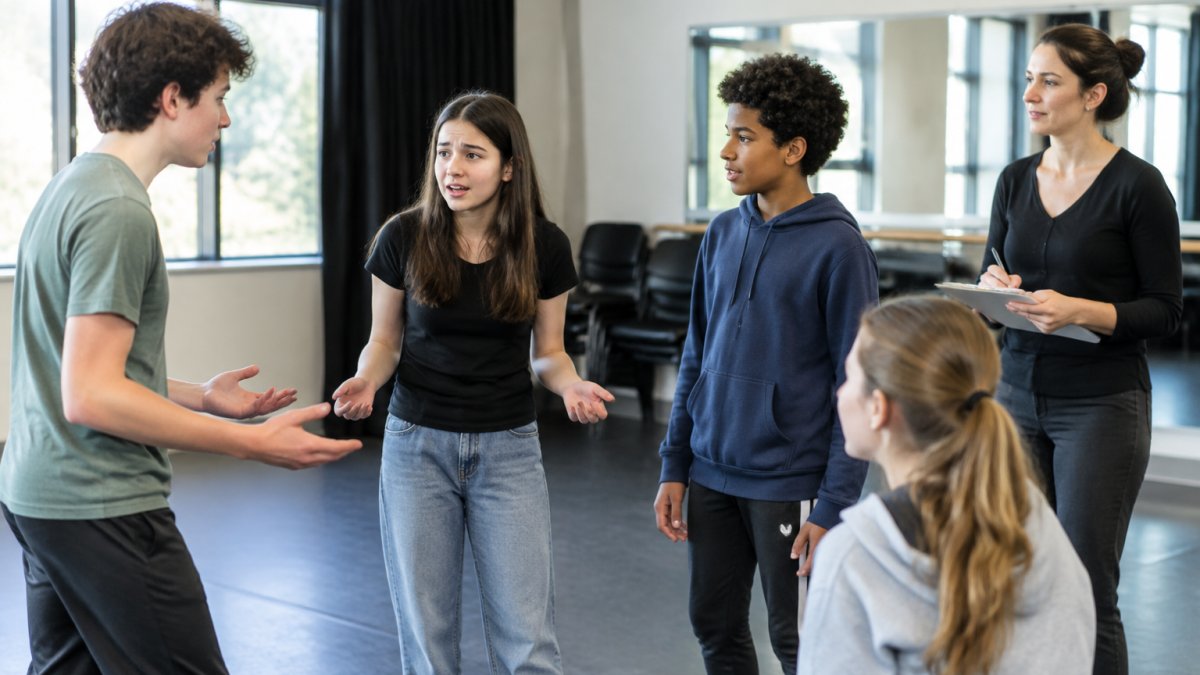
Here is a practical way to think about the difference:
- Ages 6 to 9: Games, improvisation, and simple character exercises that build focus and listening.
- Ages 10 to 13: Scene study with clear objectives, introduction to on-camera framing, and basic script work.
- Ages 14 and up: Full scene analysis, cold reading practice, self-tape preparation, and deeper character development.
Teens often want to be taken seriously, and a program that treats them as capable young artists tends to keep them motivated. Look for classes that group students by age or experience, not just by sign-up date.
Summer programs can offer an intensive option for families who want focused work over several weeks.
Children’s Audition Preparation Classes and What They Teach
Audition preparation is where many children’s programs fall short. Learning a monologue is not the same as preparing for an audition. A professional audition for film, television, or commercials usually follows a predictable structure, and strong training teaches children to navigate each stage rather than memorize a single speech.
Here is what a real audition process typically involves, and what a quality class should rehearse:
- Sides, not monologues. Casting directors usually send a short excerpt from the actual script, often only a page or two, sometimes the night before. Classes should practice reading cold sides aloud, making a fast choice about what the character wants, and committing to it on the first read.
- The slate. Most on-camera auditions open with the child stating their name, age (or playing age), and sometimes location. It sounds simple, but a clean, relaxed slate sets the tone. Students should practice slating without rushing or over-performing.
- The reader. In the room, a casting assistant or reader performs the other lines. Children need practice acting with a reader who is not making eye contact and may read flatly, rather than waiting for a scene partner to give them energy.
- Marks and eyelines. On-camera auditions require hitting a taped mark and looking at the reader beside the camera lens, not into it. This is a physical skill that improves only with repetition.
- Taking a note. A casting director may ask for an adjustment: “make it smaller,” “try it angrier,” “start later.” The ability to absorb a note and deliver a different take within seconds is one of the most heavily weighted skills in the room, and it is trainable.
- Self-tape setup. Many first-round auditions are now self-tapes. A class should teach families the basics: a plain background, even lighting, phone at eye level, clean audio, and a frame from roughly the chest up.
Freezing during auditions is common, even among adults. Children are no different. Repeated practice in low-pressure settings helps children stay present when the stakes feel higher. Teachers who understand this build in repetition and gradual exposure rather than throwing students into high-pressure situations too early.
Watch out: a program that only rehearses one polished monologue for months is preparing a performance, not an audition. If your child has never practiced cold sides, a slate, or a self-tape in class, the training is not aligned with how casting actually works.
The table below summarises the audition stages a quality class should rehearse, so you can check whether a program prepares children for how casting actually works.
| Audition stage | What children practice | Why it matters |
|---|---|---|
| Sides | Reading cold sides aloud and committing to a choice | Sides are often sent the night before |
| Slate | Stating name, age and location cleanly | Sets the tone of the audition |
| Reader | Acting with a flat or non-eye-contact reader | Real rooms rarely offer a lively partner |
| Marks and eyelines | Hitting a taped mark and looking beside the lens | A physical skill that improves with repetition |
| Taking a note | Delivering a different take within seconds | One of the most heavily weighted room skills |
| Self-tape setup | Plain background, even lighting, eye-level phone | Many first rounds are now self-tapes |
Finding Professional Acting Training for Kids Near Me
Searching for professional acting training for kids near me will return many options, so narrowing the field early saves time. Proximity matters because weekly classes add up, and a long commute can wear down a child’s motivation as quickly as a weak curriculum.
Start with a short list of programs within a realistic driving distance. Then check each one against the criteria in this guide. Ask whether instructors have working industry experience, whether class sizes allow individual feedback, and whether the program explains how it prepares students for auditions.
Local training has one clear advantage: you can visit in person, watch a class, and meet the instructors before you commit. Many reputable programs offer trial sessions or open houses. Take advantage of them.
Does Professional Acting Training for Kids Online Work?
Online acting training for kids has grown considerably, and it can work well for certain goals. Video lessons allow children to practice from home, and instructors can give feedback on self-tapes, which are now a standard part of many casting processes.
Online training has limits, though. Ensemble work, live scene partners, and in-person feedback on physical choices are harder to replicate over a screen. Younger children, in particular, often benefit from being in a room with other kids.
A reasonable approach is to treat online classes as a supplement rather than a complete replacement, especially for beginners. If your child is already experienced and mainly needs self-tape coaching, online sessions may serve them well on their own.
Ask any online program how it handles scene partners and live feedback before enrolling.
How to Evaluate Instructors, Quality, and Costs
This section is a parent’s vetting checklist: the specific questions and observable markers that separate a professional training environment from a casual enrichment class.
Instructors and faculty credentials. Ask three things: what professional credits the teacher holds (union membership such as SAG-AFTRA or Actors’ Equity, casting office experience, or produced film and television work), how long they have taught children specifically, and whether they receive ongoing training themselves. Working credits matter, but teaching children is a separate skill. A common pattern is a strong working actor who has never managed a room of eight-year-olds. Ask to observe a class before enrolling; a confident program will allow it.
Class size and teacher-to-student ratio. For scene study and on-camera work, individual feedback is the product. Ask for the maximum enrollment per class and how much individual coaching each student receives per session.
Curriculum transparency. A quality program can describe what each level covers, how students advance, and what a student should be able to do at the end of a term.
Safety and supervision protocols. This is the question parents ask least and should ask first.
Performance and showcase claims. Ask what students actually perform in, how often, and whether showcases are ticketed or free. Be cautious of programs that promise guaranteed roles, agent meetings, or quick results. Acting careers take time, and honest programs will say so.
Costs and what tuition includes. Tuition varies widely by market, class length, and frequency, and many programs add fees for showcases, headshots, or private coaching.
Accessibility and financial aid. Acting training can be expensive, and few studios advertise assistance. Ask directly whether the program offers scholarships, sliding-scale tuition, payment plans, or work-study arrangements.
Neurodiversity and learning differences. If your child has ADHD, autism, or social anxiety, ask how the program supports different learners: whether class sizes allow quiet breaks, whether instructors have experience with sensory needs, and whether a trial class can be arranged before committing.
A practical next step is to shortlist three programs, request a syllabus and a class observation for each, and compare the answers side by side. The program that answers specifically and welcomes scrutiny is usually the one built for the industry rather than for enrollment numbers.
Booking Your Child’s First Session at Ventura Actors Studio
Ventura Actors Studio provides professional, industry-focused acting training for kids, teens, and adults. Founded by award-winning actress and producer Gina Nemo, the studio offers small class sizes, instructors with over 40 years of experience, and mixed-level classes that welcome beginners.
For parents deciding on a first step, a trial class is a low-commitment way to see the teaching style firsthand. Ask about current schedules and pricing directly, since rates depend on the program you choose.
Get started with Ventura Actors Studio and see how its training approach fits your child’s goals.
Frequently Asked Questions
What age should a child start acting classes?
Many programs accept children around age 6 or 7, when they can follow multi-step instructions and work in a group. Younger children usually do better with games and improvisation than with scripted work. Teens can move into scene study and audition technique. Ask any studio how it structures classes by age, and whether mixed-level groups are separated by experience. A good program will explain what it expects at each stage rather than rushing a young child into adult-style auditions.
How much do kids’ acting classes typically cost?
Pricing depends on class length, session frequency, whether classes are group or private, and the program’s schedule. Ventura Actors Studio has not published a standard price list here, so the best approach is to contact the studio or check its website for current tuition and class options. When comparing any programs, ask what is included, such as materials, showcases, and audition coaching, so you compare the full value rather than just the hourly rate.
Are online acting classes effective for kids?
Online classes can work well for scene study, script analysis, and self-tape practice, since many auditions now request recorded submissions. They are less effective for ensemble work, physical staging, and in-person feedback on stage presence. Parents should ask how the instructor gives feedback, how many students share a session, and whether the program includes recording and review. Combining live instruction with occasional in-person sessions often gives the strongest results.
What should parents look for in professional acting training for kids?
Look for instructors with real industry experience in television, film, or commercials, and a clear curriculum covering on-camera technique, cold reading, and script analysis. Small class sizes make individual feedback possible. Ask whether the program is age-appropriate, how it handles confidence and performance pressure, and whether it has a supportive environment. Realistic expectations matter too: training builds skills and confidence, but it does not guarantee roles.


Related Posts
Best Acting Resume Fonts and Layouts That Book Roles
Your acting resume fonts and layout decide your first impression. Compare…


Is Professional Acting Training Worth the Cost?
Before you pay for acting training, total tuition, living costs, lost income…
Advanced Scene Study for Working Actors: A Practical Guide
Advanced scene study for working actors explained: how to pick a class, analyze…