

Table of Contents
- What Makes Commercial Auditions Different
- Research the Role and Understand Your Casting Notice
- Master Commercial Audition Script Practice
- Study Commercial Audition Examples and Find Your Type
- Prepare Your Commercial Self-Tape Audition Tips
- What to Wear to a Commercial Audition
- Deliver Your Performance and Handle Direction
- Common Mistakes and How to Recover
- Frequently Asked Questions
Last Updated: October 19, 2026
What Makes Commercial Auditions Different
Learning how to prepare for a commercial audition means understanding that commercial auditions operate under a completely different set of rules than theatrical roles. The casting director wants to see you as a real person, not a character.
Here’s the core difference: In a theater or film audition, you build a character over time. In a commercial audition, you have seconds to make an impression.
Commercial auditions also move faster. You’ll often get your sides minutes before walking in. The performance itself is usually shorter, sometimes just 15-30 seconds on camera. But that brevity doesn’t mean less preparation, it means smarter, more focused preparation.
At Ventura Actors Studio, we emphasize this distinction from day one. Our instructors work with actors to understand that commercial work requires a different mindset.
Research the Role and Understand Your Casting Notice
Start by reading your audition notice carefully. The casting notice tells you everything you need to know about what the casting director wants. Read it multiple times before your commercial audition.
Look for these key details:
- The product or service – What are you selling? A car, coffee, insurance, medication?
- The character description – Age range, personality type, lifestyle
- The tone – Comedic, dramatic, warm, energetic, relatable?
- Any specific instructions – Wardrobe suggestions, accent requirements, special skills needed
Understanding the commercial audition context matters. Are you playing a parent, a friend, a professional? Is this a 30-second spot or a longer format? Each detail shapes how you should prepare.
Research the brand if you can. Watch their existing commercials. What’s their messaging? What kind of person do they typically cast?
Don’t overthink it, though. Your job isn’t to predict exactly what they want. Your job is to understand the scenario and bring your best, most authentic self to it.
Master Commercial Audition Script Practice
Your commercial audition script is short, but every word matters. Most commercial sides are just a few sentences. That brevity means you need to be intentional about every choice.
Start by reading the script aloud multiple times. Don’t perform it yet, just read it naturally, like you’re talking to a friend.
Once you’re familiar with the words, break the script into beats. A beat is a moment where the intention or emotion shifts.
Here’s a practical approach to commercial audition script practice:
- Read the script aloud 5-10 times without overthinking
- Identify the main beats or emotional shifts
- Try different deliveries, energetic, warm, skeptical, excited
- Record yourself and watch it back
- Notice what feels natural versus what feels forced
- Lock in the version that feels most authentic to you
The goal isn’t memorization in the traditional sense. You need to know the script well enough that you can focus on your performance, not on remembering words.
Many actors make the mistake of over-rehearsing commercial audition scripts. You want familiarity, not perfection. Leave room for spontaneity and genuine reaction in the moment.
Study Commercial Audition Examples and Find Your Type
Watching professional commercials teaches you what casting directors are actually looking for. Study commercials in your type range. If you’re a parent, watch parenting commercials.
Pay attention to:
- How actors deliver lines naturally without theatrical affectation
- The pacing and rhythm of commercial copy
- How actors react to products or situations
- The balance between selling and staying human
Finding your type is essential for commercial audition preparation. Your type isn’t just your age, it’s your essence. Are you the trustworthy authority figure? The relatable parent? The fun, energetic friend?
Casting directors see types. Understanding yours helps you make smarter choices in auditions. It also helps you avoid wasting energy trying to be something you’re not.
Watch commercial audition examples from actors who share your type. Notice their energy, their delivery style, their choices.
Here’s what to look for in commercial audition examples:
- Natural delivery that doesn’t feel “actorsy”
- Genuine reactions to the product or scenario
- Energy that matches the brand’s tone
- Authenticity that makes you believe the actor actually uses the product
When you’re studying commercials, ask yourself: Why did they cast that person? What is that actor bringing that makes the spot work? What can I learn from their approach?
Prepare Your Commercial Self-Tape Audition Tips
Most commercial auditions now start with a self-tape. You’re filming yourself in your own space, usually on your phone or camera.
Your commercial self-tape audition setup needs to be professional but simple. You don’t need a fancy studio. You need good lighting, a clean background, and a phone or camera that shoots clear video.
Self-tape basics:
- Lighting – Use natural window light or a simple ring light. Avoid harsh shadows on your face.
- Background – A plain wall or simple home setting works fine. Avoid clutter.
- Audio – Record in a quiet space. Phone audio is usually fine, but avoid background noise.
- Framing – Shoot from roughly chest-up. Keep your eyes on the camera or slightly off-camera as directed.
- Multiple takes – Film 3-5 takes. Pick the one that feels most natural and genuine.
For your commercial self-tape audition tips, remember that casting directors want to see YOU, not a polished performance. They’re looking for authenticity.
Before you hit record:
- Clear your space and test your lighting
- Read the script aloud several times
- Make your acting choices, what’s your intention?
- Hit record and do a quick slate (say your name and the character)
- Do your performance
- Do at least 2-3 more takes with slight variations
Watch your commercial self-tape audition back. Which take feels most genuine? Which one would make you believe the actor actually believes in the product? That’s usually your best take.
Don’t overthink the technical side. Casting directors have seen thousands of self-tapes shot in home offices and bedrooms. They care about your performance, not your production value.
Join our acting classes in Ventura today! →
| Self-Tape Element | Best Practice | Why It Matters |
|---|---|---|
| Lighting | Natural window light or ring light | Shows your face clearly without harsh shadows |
| Background | Plain wall or simple home setting | Keeps focus on you, not your environment |
| Audio | Quiet space, phone or external mic | Casting director can hear you clearly |
| Framing | Chest-up, eyes on camera or slightly off | Shows your face and upper body naturally |
| Takes | 3-5 variations, pick the most natural | Gives you options and ensures authenticity |
What to Wear to a Commercial Audition
Your wardrobe for a commercial audition should support the character, not distract from it. The casting director wants to see you as the person in the commercial, which usually means dressing like a real person in a real situation.
Read your casting notice for wardrobe guidance. If it says “business casual,” wear business casual. If it says “athletic wear,” wear athletic wear. Follow the direction given.
General guidelines for what to wear to a commercial audition:
- Match the character – If you’re playing a parent, dress like a parent. If you’re a fitness enthusiast, wear athletic gear.
- Keep it simple – Solid colors work better than busy patterns. Avoid logos or anything that draws attention.
- Fit well – Wear clothes that fit your body comfortably. You want to move naturally.
- Be yourself – Wear something that makes you feel confident and like yourself.
- Avoid extremes – No heavy makeup, no extreme hairstyles, nothing that pulls focus from your face.
The goal is to look like the person in the commercial without looking like you’re in costume. You’re not trying to be interesting or fashionable, you’re trying to be believable.
For your commercial self-tape audition, wear the same thing you’d wear to an in-person audition. This helps the casting director envision you in the role.
Deliver Your Performance and Handle Direction
When you walk into the audition room or hit record on your self-tape, your job is simple: deliver a genuine performance and stay open to direction.
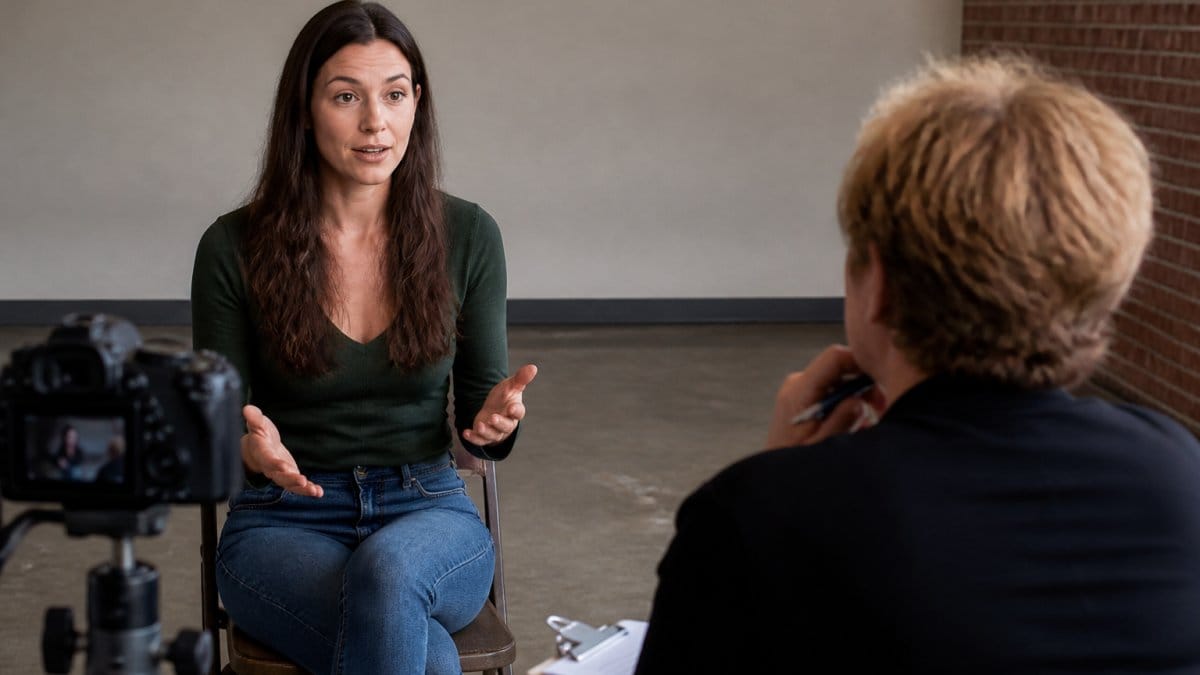
Most commercial auditions follow this pattern:
- You slate (say your name and any required info)
- You perform the commercial
- The casting director gives you direction for an alternate take
- You perform again with that direction
The first take is your baseline. You’ve prepared, you know your script, you’re ready. Deliver it confidently and authentically. Don’t overthink it in the moment.
Then comes the direction. The casting director might ask you to be more energetic, more skeptical, warmer, or faster. This is your chance to show flexibility.
Here’s how to handle direction in a commercial audition:
- Listen fully – Hear what they’re asking for without interrupting
- Ask for clarity if needed – “So you want me more excited?” is fine
- Make the adjustment quickly – Don’t ask for time to prepare. Show them you can pivot.
- Commit fully – Even if the direction feels weird, commit to it completely
- Stay confident – Don’t apologize or second-guess yourself
The casting director isn’t critiquing you. They’re testing whether you can take direction and adjust your performance on the fly. This is a real skill that booking actors have.
One more thing: your energy and attitude matter as much as your performance. Walk in confident but not arrogant. Be friendly and professional. Make eye contact. Smile.
Common Mistakes and How to Recover
Most actors make predictable mistakes in commercial auditions. Knowing them helps you avoid them.
Mistake 1: Over-performing
Many actors think commercial auditions require big, theatrical energy. They don’t.
Mistake 2: Not listening to the casting director
You come in with your prepared performance locked in. The casting director gives you direction. You ignore it and do what you prepared.
Mistake 3: Memorizing too rigidly
When you memorize too tightly, your performance sounds robotic. You’re so focused on getting the words right that you lose spontaneity.
Mistake 4: Not making eye contact
Looking away, down, or at your script reads as nervous or disengaged. Make eye contact with the camera or the reader.
Mistake 5: Apologizing or self-critiquing
You finish your take and immediately say, “That wasn’t good,” or “Can I do that again?” No. You did it.
If you do mess up:
- Stay calm and professional
- Don’t apologize excessively
- Ask if you can do another take
- Reset and go again
- Move forward without dwelling on it
Recovery in a commercial audition is about mindset. One flubbed line doesn’t define your audition. How you respond to it does.
Frequently Asked Questions
How do I prepare for a commercial audition if I’ve never done one before?
Start by researching the product or service in the commercial. Read the audition sides multiple times aloud to understand the tone and character. Practice delivering the lines naturally and conversationally, commercials require authentic, relatable performances, not theatrical delivery. Record a self-tape to see how you look on camera, then review it critically. If you’re nervous about the audition room itself, arrive early, take deep breaths, and remind yourself that casting directors want you to succeed. Many actors find that treating their first commercial audition as a learning experience, rather than a booking opportunity, reduces pressure and improves performance.
What should I wear to a commercial audition?
Wear clean, well-fitting clothes that represent your everyday look and match the character type in the audition notice. If the breakdown specifies ‘business professional,’ wear business casual. If it says ‘athletic,’ wear gym clothes. Avoid busy patterns, logos, or anything that distracts from your face. Ensure your clothing allows you to move freely and sit comfortably. Wear minimal jewelry and keep hair and makeup natural unless the breakdown requests otherwise. The goal is to look like the character, not a costume version of yourself. When in doubt, choose neutral, flattering pieces that let your face and performance be the focus.
How long should a commercial self-tape audition be?
Most commercial self-tapes should be 30 seconds or less, matching the standard commercial length. Your slate (where you state your name and the character) typically takes 3-5 seconds, leaving 25-30 seconds for your performance. If the audition notice specifies a longer format, follow those instructions exactly. Keep the slate simple: look directly at the camera, state your name clearly, and if requested, slate the character name. Avoid over-explaining or adding personality to the slate, save that energy for your performance. Technical quality matters: use good lighting, clear audio, and a neutral background so the casting director can focus on you.
What do casting directors look for in a commercial audition?
Casting directors prioritize authenticity, confidence, and the ability to take direction. They want to see you deliver lines naturally and conversationally, as if you’re talking to a friend, not performing. They assess whether you fit the character type and whether you can make quick adjustments when asked to do alternate takes. Your professionalism matters too, showing up on time, following instructions, and maintaining a positive attitude stand out. Most importantly, they’re looking for someone who can sell the product or message believably. Avoid over-acting or being too theatrical; commercials succeed when the performance feels genuine and relatable.

Related Posts

Best Acting Resume Fonts and Layouts That Book Roles
Your acting resume fonts and layout decide your first impression. Compare…


Is Professional Acting Training Worth the Cost?
Before you pay for acting training, total tuition, living costs, lost income…

Professional Acting Training for Kids: What Parents Should Check
Acting training for kids can build confidence, but program quality varies…