

Table of Contents
- What Makes the Best Acting Classes in Ventura County
- Acting Classes for Beginners: Building Your Foundation
- On-Camera Acting Classes: The Industry Standard
- Acting Audition Preparation: From Script to Callback
- Acting Class Cost and Commitment: What to Expect
- Classes for Different Age Groups and Experience Levels
- How to Choose the Right Acting Training for Your Goals
- Frequently Asked Questions
Last Updated: October 16, 2026
What Makes the Best Acting Classes in Ventura County
Finding the right acting training shapes your path in the entertainment industry. The best acting classes in Ventura County balance professional instruction with supportive environments where actors of all levels develop real skills. At Ventura Actors Studio, we’ve built our program around hands-on training from working professionals, small class sizes with personal feedback, and curriculum designed for TV, film, and commercial work.
Three factors separate a good acting class from a transformative one. First, your instructor needs real industry experience, credits in the work you’re pursuing, not just theater. Second, class size matters: a group of 20 gets surface-level feedback, while a group of 8 gets the personalized attention that accelerates growth. Third, the curriculum must address on-camera technique specifically, not just scene study or monologue work.
When evaluating options, ask: will this training actually help me book roles?
Acting Classes for Beginners: Building Your Foundation
Beginners often worry about feeling lost among experienced actors, but a well-designed beginner program builds foundational skills systematically: script analysis, character work, emotional authenticity, and on-camera technique. You start with fundamentals and progress at a pace that fits your skill level.
What separates beginner-friendly classes from “beginner-tolerant” ones is intentional curriculum design. A program that welcomes beginners scaffolds the learning: you break down a script before performing it, understand character motivation before stepping in front of the camera, and practice emotional recall in a safe environment before delivering on set.
Actors from community theater often ask whether on-camera work differs from stage work. It does, and the difference matters. On stage, you project to an audience 20 rows back; on camera, the audience is 18 inches away. Your internal work becomes visible and your external performance smaller and more precise. A beginner program that ignores this leaves you unprepared for professional auditions.
On-Camera Acting Classes: The Industry Standard
On-camera acting is the skill that matters most for TV, film, or commercials, the format where professional work happens.
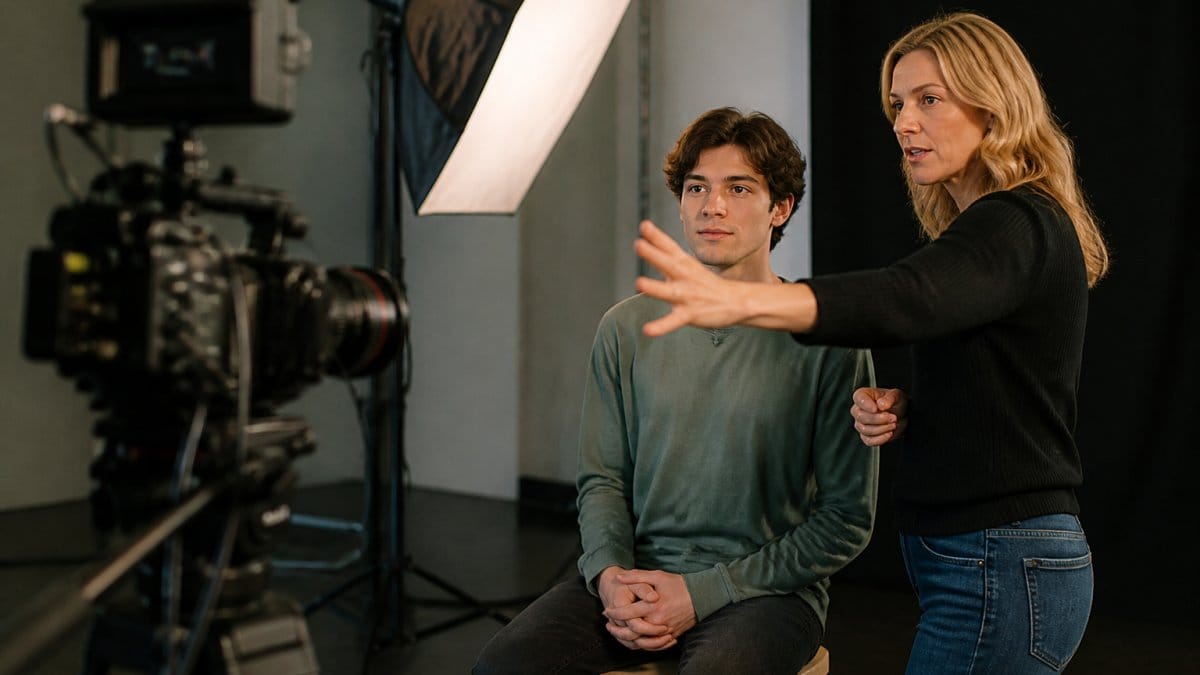
Traditional acting training often overlooks the technical side of on-camera work. Your eyeline, stillness, and breathing all register differently through a lens than before a live audience.
Instructors with real on-camera credits bring something invaluable: they’ve been on professional sets and know what casting directors look for in audition tapes. They understand how formats differ, network television moves faster than streaming, commercials require different energy than dramatic scenes, and translate that into practical guidance textbook training can’t provide.
Acting Audition Preparation: From Script to Callback
Auditions are where training meets opportunity, and many actors freeze despite solid training because they haven’t practiced the specific skills auditions demand. Audition prep isn’t just about performing well; it’s about managing psychological pressure, handling rejection, and making strategic choices under constraints.
A dedicated audition prep class addresses the mental side of auditioning: staying grounded when nervous, taking direction quickly, and adjusting on the fly. You work with actual sides, the script pages you’ll receive in real auditions, rather than monologues rehearsed for weeks. That’s the difference between training and audition-ready training.
The callback process is where many actors stumble. You’ve impressed the casting director enough to return, but now they want something different, a new energy or interpretation. Actors who’ve practiced adapting quickly have a significant advantage: callbacks aren’t about perfecting the original performance but demonstrating range and responsiveness.
Acting Class Cost and Commitment: What to Expect
Pricing for acting classes can vary, making direct comparisons challenging. Here’s a practical framework for understanding what to expect and the questions that reveal the real cost.
Typical price ranges in the area. Group acting classes generally run about $150-$350 per month for a weekly class, or roughly $25-$60 per single session. On-camera and audition-prep intensives often price higher, commonly $200-$500 for a multi-week session, because they include camera time and playback review. Private coaching is usually billed hourly, commonly $75-$200 per hour depending on the instructor’s credits and whether they include self-tape review.
Billing models to watch for.
- Monthly membership: a flat fee for a recurring weekly class. Easiest to budget, but check the cancellation notice period (often 30 days).
- Per-session / drop-in: pay as you go. Flexible, but the per-class rate is usually the highest.
- Session or term packages: a block of 6-12 weeks paid upfront. Often the best per-class value, but non-refundable once the term starts.
- Private coaching: hourly or in discounted packages of 4-10 sessions.
The line items beyond tuition. Ask specifically about:
- Registration or enrollment fee, a one-time charge, commonly $25-$75.
- Materials and scripts, some programs include sides; others charge for scene packets.
- Showcase or recital fee, if the program ends in a performance, there may be a separate production fee, sometimes $100-$300, plus the cost of inviting guests.
- Self-tape and reel costs, if the class produces audition tapes or a demo reel, confirm whether editing and equipment are included.
- Trial or observation policy, many studios offer a free first class or a paid single trial. Ask before you commit to a term.
Commitment is the real cost driver. A cheaper monthly class you attend consistently beats an expensive program you drop after three weeks. Before enrolling, confirm:
Join our acting classes in Ventura today! →
- The exact meeting days and times, and how many classes are in the term.
- The attendance and make-up policy, can you reschedule a missed class?
- The cancellation and refund terms in writing.
- Whether tuition is prorated if you join mid-session.
How to get a real number fast. Call or email each studio and ask three questions: What is the total cost for one full term, including all fees? What is the cancellation policy? Is there a free or reduced-price trial class? A studio that answers clearly usually runs a well-organized class.
Budget for the full term, not the first month. Add tuition, any registration fee, materials, and a possible showcase fee, then divide by the number of classes. That per-class figure is the only number that lets you compare two programs fairly.
Be cautious of any program that requires a large non-refundable upfront payment before you have observed a class, or that will not put its cancellation policy in writing. Legitimate programs are transparent about both.
Classes for Different Age Groups and Experience Levels
Acting training looks different depending on your age, your experience, and, in a county this spread out, where you live. Here’s how to match a format to a student and think about coverage across the area.
By age and level.
- Younger students (roughly ages 6-12): classes emphasize confidence, imagination, listening, and basic stage and camera awareness. Sessions are usually shorter (45-60 minutes) and often end in a low-pressure showcase for families.
- Teens (roughly 13-17): programs begin introducing audition technique, cold reading, and career awareness. Some split into on-camera and musical-theater tracks. This is also when students start building a first self-tape and a short reel.
- Adult beginners: the focus is foundational, script analysis, character work, emotional authenticity, and the technical basics of on-camera performance, in an environment built for people starting later, often alongside full-time jobs.
- Experienced adults: scene study, advanced on-camera work, and professional navigation (callbacks, agent meetings, self-tapes).
Mixed-level classes: when they work. A mixed group succeeds when the instructor tailors feedback to each student’s level and deliberately pairs stronger actors with newer ones. It fails when one curriculum is taught to everyone.
Coverage across the county. Options cluster in a few pockets, so it pays to map them before you commit to a drive:
- Ventura and the immediate coast: the densest concentration of studios, with the widest range of age groups and on-camera formats.
- Oxnard and Port Hueneme: a growing set of options, often with strong youth and teen programs.
- Camarillo and Thousand Oaks: suburban studios that tend to serve families and offer convenient evening and weekend schedules.
- Simi Valley and Moorpark: smaller inventories, frequently built around after-school youth classes.
- Santa Paula, Fillmore, and Ojai: limited dedicated studios, so residents often commute toward Ventura or the Conejo Valley.
Nearby alternatives to weigh. Some actors travel toward Los Angeles for intensive on-camera or industry-focused programs. That can add real value, but factor in drive time, gas, and missed classes due to traffic.
A quick way to choose. Decide your goal (confidence vs. professional work), your medium (stage vs. on-camera), and your realistic weekly time. Then pick the closest program that matches all three and offers a trial class.
Match the format to the student first (age, level, medium), then choose the closest studio that fits. A convenient, well-run local class you attend consistently will outperform a prestigious one you can only reach occasionally.
How to Choose the Right Acting Training for Your Goals
Start by clarifying your goal: professional acting or confidence and creative expression? TV and film, or theater? Transitioning from community theater to professional work, or exploring acting for the first time? Your goal determines what training makes sense.
Research instructors, not just programs. What’s their background? Have they worked in the industry you’re targeting? What roles have their students booked?
Visit classes before committing, many programs offer free observation or trials. Watch how the instructor gives feedback: is it specific and actionable, or vague? Do they address on-camera technique or just performance? How do they handle different skill levels? Trust your instinct about whether you’d thrive there.
Ask about performance opportunities. Do students perform in showcases? Can you build a reel? Does the program connect you with casting directors or agents? Training alone isn’t enough; you need opportunities to apply what you’ve learned and build professional materials.
Choosing the best acting classes in Ventura County means finding instruction that combines real professional experience with personalized attention and curriculum designed for the entertainment industry. Our alumni have booked roles on Grey’s Anatomy, Netflix films, and national commercials. Learn more about professional acting training standards and explore how structured, industry-focused instruction accelerates your development.
| Class Type | Best For | Time Commitment | Focus |
|---|---|---|---|
| Beginner Group Classes | New actors building foundation | 1-2 hours weekly | Script analysis, character work, basics |
| On-Camera Training | Actors pursuing TV/film/commercials | 1.5-2 hours weekly | Camera technique, audition readiness |
| Audition Prep | Actors preparing for callbacks | Flexible, as needed | Performance under pressure, quick adaptation |
| Advanced Scene Study | Experienced actors refining craft | 2+ hours weekly | Nuance, range, professional navigation |
| Private Coaching | Accelerated skill development | 1 hour per session | Personalized feedback, intensive work |
The best time to start acting training is now, regardless of your age or experience level. What matters is consistent practice and learning from instructors with real professional credits.
Avoid programs that promise quick results or guaranteed bookings. Legitimate acting training builds skills; bookings depend on talent, persistence, and market factors beyond any class’s control. If a program guarantees specific outcomes, that’s a red flag.
Frequently Asked Questions
What should I look for in an acting class in Ventura County?
Look for instructors with professional credits in TV, film, or theater; small class sizes that allow personal feedback; curriculum focused on on-camera technique if your goal is film or television; and a track record of students booking roles. Verify that the studio offers both scene study and audition preparation, and check whether classes are mixed-level (welcoming beginners) or advanced-only. Ask about instructor experience and whether they’ve worked on actual productions.
Can beginners take acting classes, or do I need prior experience?
Beginners are welcome at quality acting studios. The best beginner-friendly classes teach fundamentals: script analysis, character development, emotional authenticity, and camera technique from scratch. Look for studios that explicitly state they accept mixed-level students and have instructors trained to work with actors at all experience levels. Many professional actors started with zero experience, so prior theater or film work is not a requirement, commitment and willingness to learn are.
How much do acting classes cost, and what affects pricing?
Acting class pricing depends on class format (group, semi-private, or private), session length, frequency, and studio location. Many studios offer flexible schedules with options for weekly sessions or intensive workshops. Pricing also varies based on instructor credentials and whether the curriculum includes audition prep, scene study, or on-camera training. Contact studios directly for current rates and package options tailored to your goals.
Is on-camera acting training different from theater acting, and which should I choose?
Yes, on-camera acting and theater acting require different techniques. On-camera work emphasizes subtle facial expressions, eye contact with the lens, and camera angles; theater relies on projection, broader gestures, and reaching an audience at distance. If you’re pursuing TV, film, or commercials, on-camera training is essential. If your goal is stage performance, theater technique matters more. Many serious actors study both, since the skills complement each other and expand casting opportunities.

Related Posts
Best Acting Resume Fonts and Layouts That Book Roles
Your acting resume fonts and layout decide your first impression. Compare…


Is Professional Acting Training Worth the Cost?
Before you pay for acting training, total tuition, living costs, lost income…
Professional Acting Training for Kids: What Parents Should Check
Acting training for kids can build confidence, but program quality varies…